


















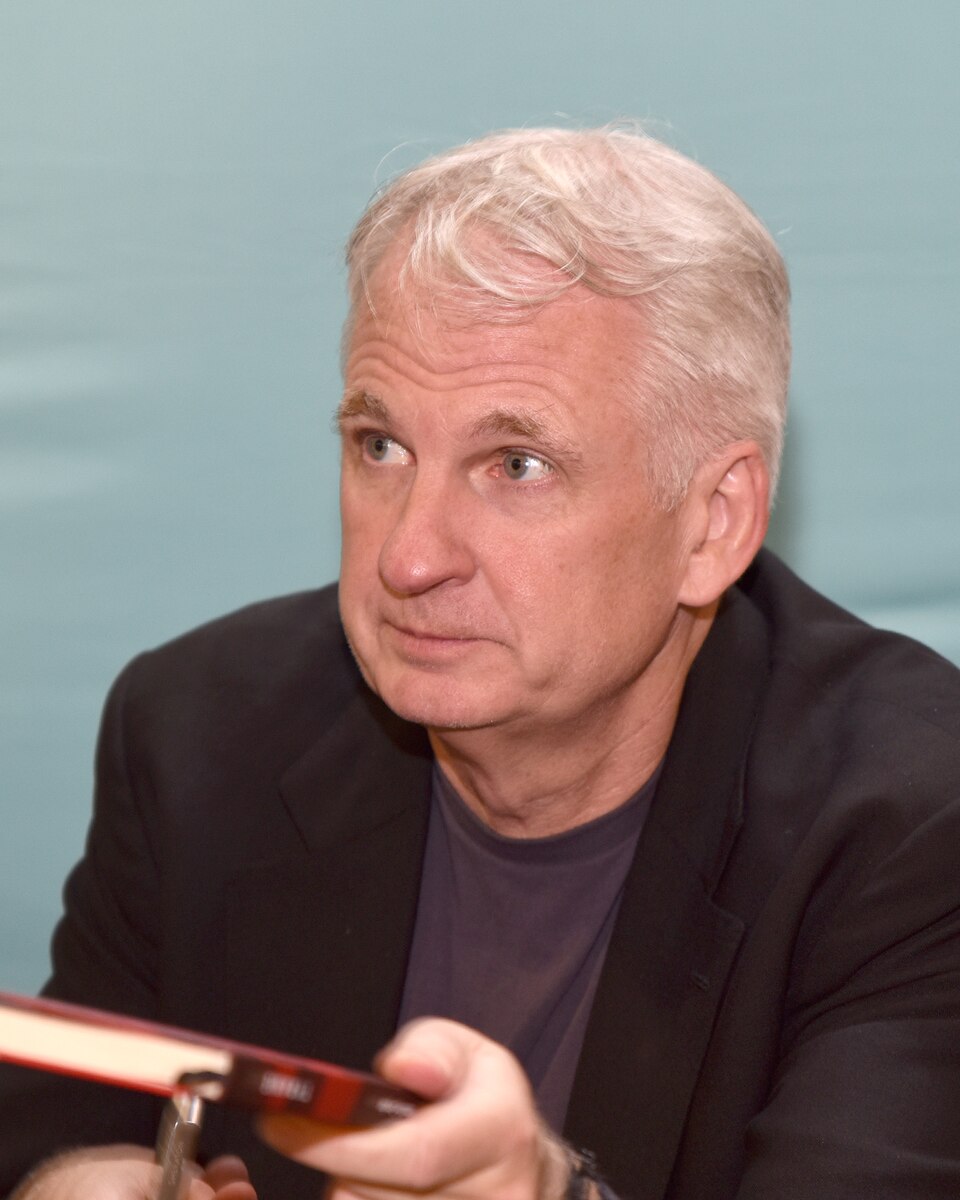
Ukraine was once expected to fall within 72 hours of Russia’s full-scale invasion. Now American historian Timothy Snyder is discussing what Ukraine could become after a victory. At the Ukrainian Catholic University in Lviv, he outlined three possible futures: Ukraine joining and reshaping the European Union, a coalition of middle powers, and a struggle against propaganda’s “artificial reality.” Snyder has previously reflected on how distorted views of Ukrainian history led observers to underestimate the country’s resistance. His new scenarios remain conditional on victory; they are not predictions that the war has ended.
Snyder discussed these ideas during a public event with Ukrainian historian Yaroslav Hrytsak. All three visions, he stressed, presume a Ukrainian victory. They are not predictions with deadlines or diplomatic agreements already under negotiation. The remarks were reported by Ukrainian broadcaster Espreso on November 20.
One future: Ukraine joins an EU that must also change
The first scenario is European integration with consequences beyond Ukraine’s own membership. Snyder argued that Ukraine could become part of the EU while also helping the bloc adapt to a different geopolitical landscape. He identified challenges associated with Russia and China as reasons for Europe to rethink how it operates. In this vision, Ukraine is more than a candidate seeking admission; it becomes an actor capable of shaping the Union’s future.
Another: a coalition of middle powers
Snyder’s second possibility would bring together states that individually lack superpower status but collectively possess substantial economic and political weight. He mentioned Ukraine, Canada, the United Kingdom and other European countries as potential partners. Such a grouping, he suggested, could develop significant global economic influence without being beholden to Russian oligarchs or American billionaires.
The historian linked this idea to uncertainty about the future direction of US foreign policy and the growing influence of Russia and China. He did not say that the countries concerned had agreed to form a new alliance. The proposal was a strategic possibility, not an announcement of a new institution.
The third challenge: defending reality itself
The most unusual of the three ideas was what Snyder called humanity’s struggle against an “artificial reality.” He was referring to the narratives produced by propaganda and amplified through social platforms, which can make a political outcome appear inevitable even when events contradict it. Ukraine’s continued resistance illustrates, in his interpretation, how real decisions and actions can defeat a misleading account of what is happening.
That argument also formed part of a broader discussion in Lviv about Ukraine’s relationship with Europe and the intertwined history of Ukraine and Poland. Snyder has separately argued that Ukraine’s defence against Russian imperial aggression is connected to the survival of Europe’s post-imperial order.
These visions operate on different levels. EU membership and a middle-power coalition concern international institutions and strategic partnerships; the third concerns public trust in evidence. What unites them is Snyder’s premise that a victorious Ukraine will have an opportunity to shape events rather than merely react to them.
 Додавайте "Україна Неймовірна" у свої джерела Google Новини